Best Identity Verification Software: Tested and Reviewed for 2026

Every identity verification software provider will tell you they’re accurate, fast, and fraud-proof. The demo always looks great. The real differences show up later.
So we did the boring part. We dug into how these software platforms actually price their service, what they include in an identity verification software package before you’ve signed the contract, where the fraud detection genuinely holds up, and what they quietly hold back.
Below are the five best identity verification software providers we’d put in front of a buyer in 2026, ranked, with the trade-offs spelled out. iDenfy, SEON, Persona, xProof, and 1Kosmos each earn their place for a different reason.
How we tested and reviewed
For each identity verification software we weighed:
Accuracy and fraud defense. Document authentication, biometric matching, liveness, and how well it resists deepfakes, presentation attacks, and injection attacks.
Pricing honesty. What you pay, when you pay it, and whether failed or denied attempts land on your bill.
What’s actually included. Whether enterprise-grade features sit behind a basic plan or get locked away until you commit to a large annual contract.
Onboarding friction. How many real users finish the flow.
Support and trials. Whether you can try before you buy, and who picks up when something breaks.
Coverage and compliance. Countries, document types, and certifications like SOC 2, ISO 27001, GDPR, ETSI and NIST.
Where a vendor’s strength is narrow, we say so. Where the catch is real, we say that too.
Comparison at a glance
Provider
Best for
Standout strength
The catch
iDenfy
ROI-focused teams, SMB to enterprise
Pay-per-approved pricing, enterprise features on basic plans
No live support on basic tiers.
SEON
Fraud-heavy onboarding
Phone and email risk enrichment on top of ID verification
Pricey, annual-only, no pay-as-you-go. To try it, you have to book a call.
Persona
Teams who want to build their own flows
Deeply customizable no-code workflows
Power means setup effort, costs climb with add-ons. Annual-only, no pay-as-you-go. To try it, you have to book a call.
xProof
Document-forensics and flexible deployment
On-prem to multi-tenant cloud
Smaller ecosystem, less name recognition. Annual-only, no pay-as-you-go. o try it, you have to book a call.
1Kosmos
Verification plus passwordless access
Decentralized identity, biometric MFA
Enterprise-weight, heavy for simple onboarding. To try it, you have to book a call.
The best identity verification software providers in 2026
1. iDenfy
Most vendors charge you for every verification attempt, whether it succeeds or not. iDenfy doesn’t, and once you’ve felt the difference on the invoice.
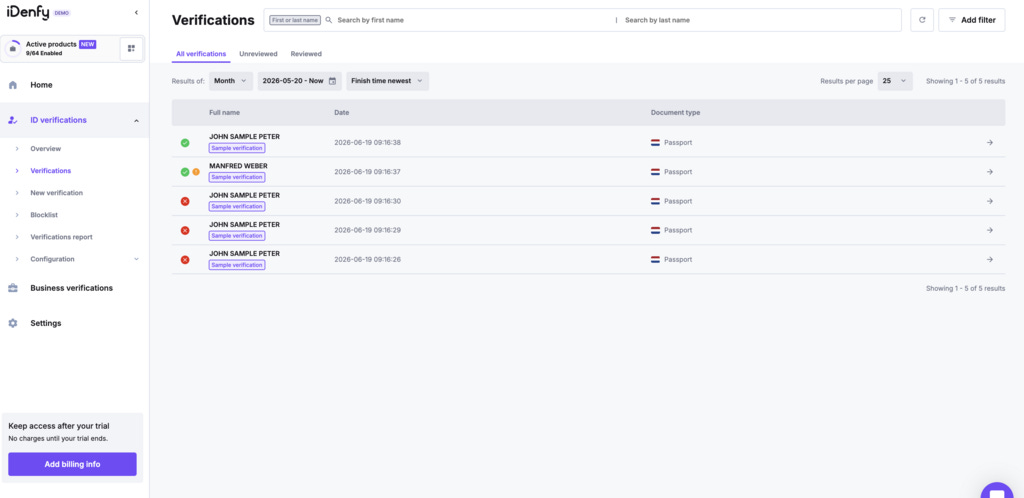
This is the part we kept coming back to. iDenfy bills pay-per-approved, so you pay only when a registration actually completes successfully. The fraudulent attempts, the abandoned half-finished checks, the duplicate fraudster trying his luck five times, none of those land on your bill.
For a business watching unit economics, that turns identity verification from a fixed tax on traffic into a cost that tracks real, converted value. And they actually help you see that ROI. iDenfy monitors your funnel for you: your drop-off rates, your successfully finished verifications, your denied ones, and they tell you how to improve. So you’re not guessing why conversions dipped last week. You can see whether the problem is integration, fraud, friction, or a document type that keeps tripping people up, and fix it.
The other thing that genuinely surprised us is what you get on the cheaper plans. With a lot of competitors, the features that matter, the deeper fraud tooling, the broader configuration, the kind of controls a serious team needs, are walled off inside annual enterprise contracts that often start somewhere north of 10,000 USD. iDenfy puts enterprise-grade capabilities in reach on even its basic plans (135 USD/month). You’re not forced into a five-figure commitment just to unlock the features you need.
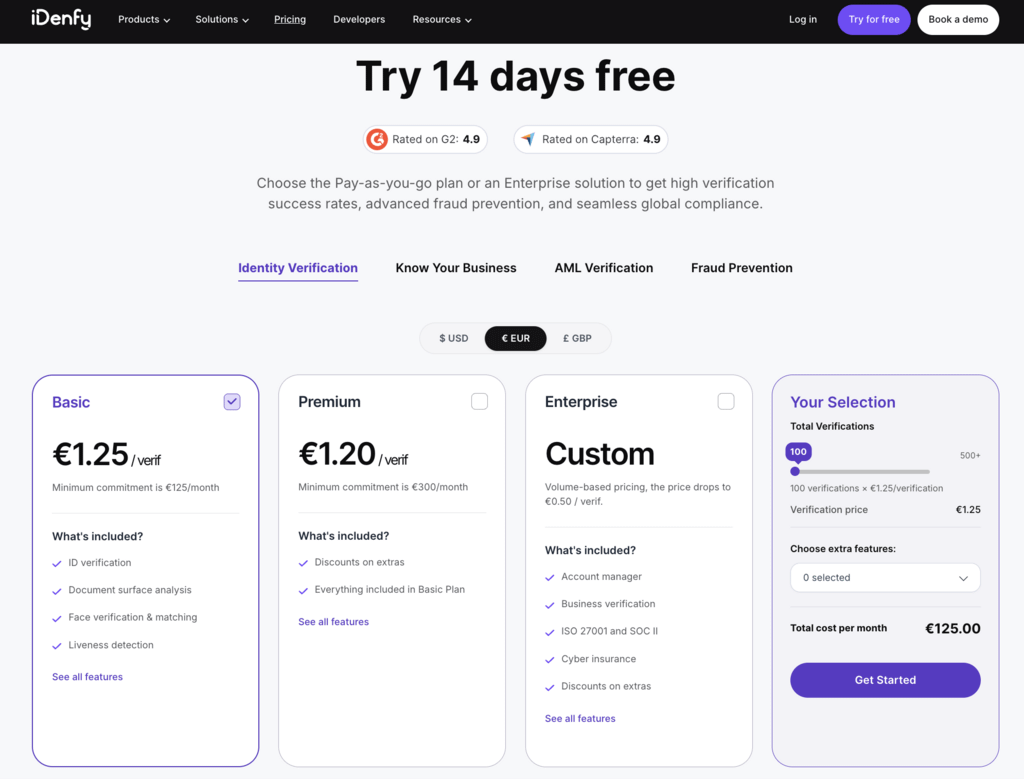
Underneath the pricing, the product holds up. AI automation backed by a 24/7 human review team, coverage across 200+ countries, 3D liveness that handles the photo, video, and deepfake attempts. It carries the compliance weight too, with SOC 2 and ISO 27001 and ETSI certification. There’s a 14-day trial, so you can run it on real traffic before committing.
The verification process is quite fast with their automated AI-powered ID verification. If you also order their human supervision review, it takes around 2–3 minutes after the automated identity verification is completed.
For fraud detection, we tried to bypass their liveness detection using a face spoofing attack by showing a face on an iPad, but we were not able to pass it. A fake California driver license also did not pass.
The honest downside: live support isn’t included on the basic plans. If you want a human walking you through rollout from day one, check what your tier covers, because front-line help leans on an AI assistant until you move up. For teams that care about real ROI and don’t want to pay a fortune to unlock the good features, though, it’s the one to beat.
2. SEON
Here’s a question identity verification alone can’t answer: this person has a valid ID and a matching face, but should you actually trust them? SEON is built to answer exactly that.
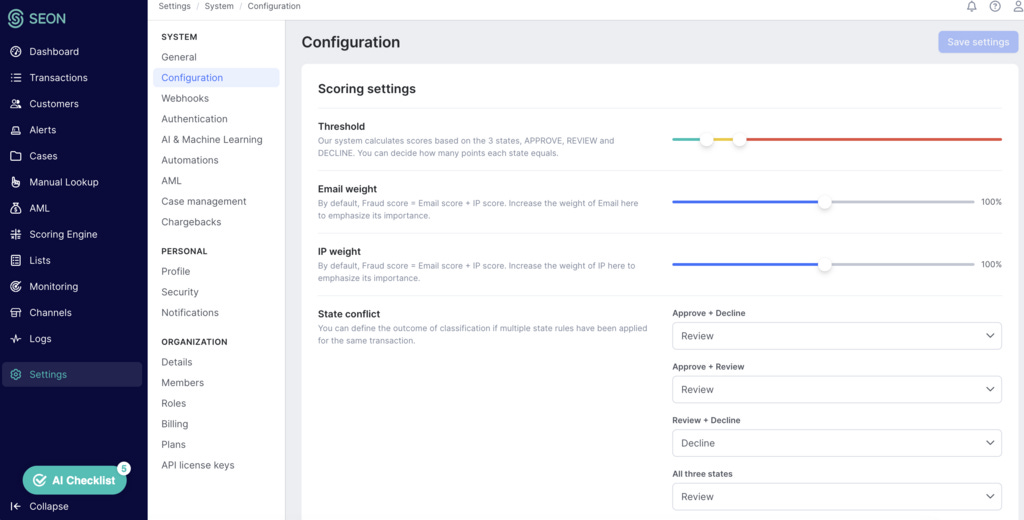
What we liked is how it stacks fraud detection on top of identity rather than treating verification as the finish line. Take its phone enrichment. Feed SEON a phone number and it returns a risk score built from real digital footprint signals: is the number linked to WhatsApp, Viber, a registered Facebook, or other social platforms? A number with years of social media history attached behaves very differently from a freshly minted burner with no footprint at all, and that gap tells you a lot before a single document is checked. The same goes for email enrichment. Pair that intelligence with an actual ID verification step and you get something much stronger than either piece alone. You’re not just confirming the ID is real, you’re reading whether the human behind it looks like a genuine customer or a fraud ring’s throwaway account.
For businesses fighting account fraud, chargebacks, or bonus abuse, that layered approach is the draw. SEON gives you device fingerprinting, velocity rules, and a configurable rules engine alongside the enrichment, so you can tune how aggressive the screening gets.
Their automated AI verification was smooth and fast. However, you cannot order additional human supervision, as SEON does not provide this service.
The fraud detection was very good. It detected our prepaid SIM card as newly activated and increased the risk score, which was a nice touch. We were not able to pass ID verification using a spoofed face or a fake California driver’s license.
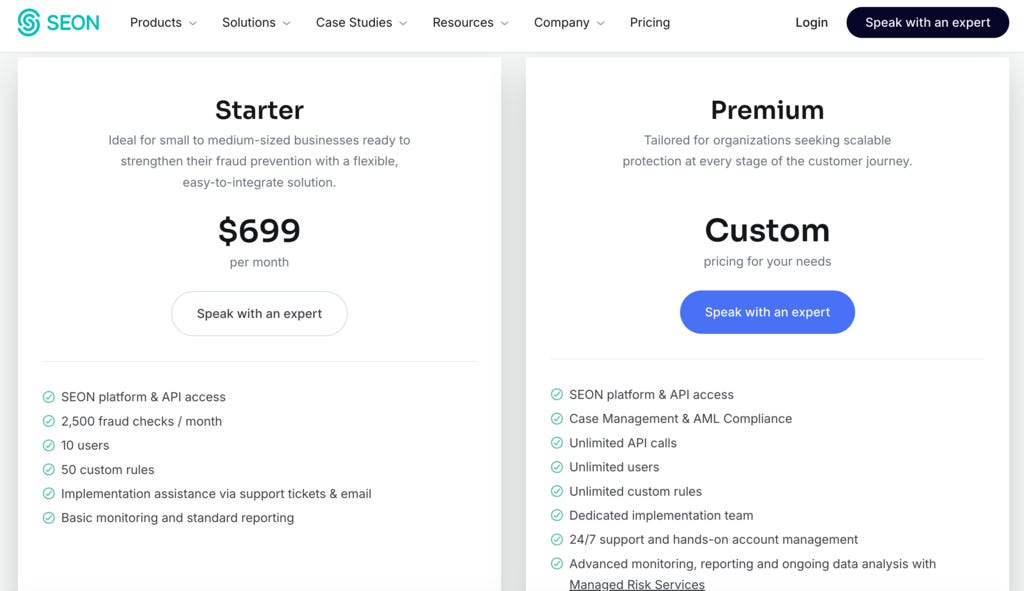
Now the part that’ll narrow the field. SEON isn’t cheap, and it isn’t flexible on commitment. Pricing starts around 699 USD per month, and there’s no pay-as-you-go option, so you’re buying an annual subscription rather than scaling spend with your volume. For a small operation testing the waters, or a seasonal business with spiky traffic, that’s a real barrier. But if fraud is genuinely hurting you and you want intelligence that goes beyond “is this ID valid,” SEON earns its keep.
3. Persona
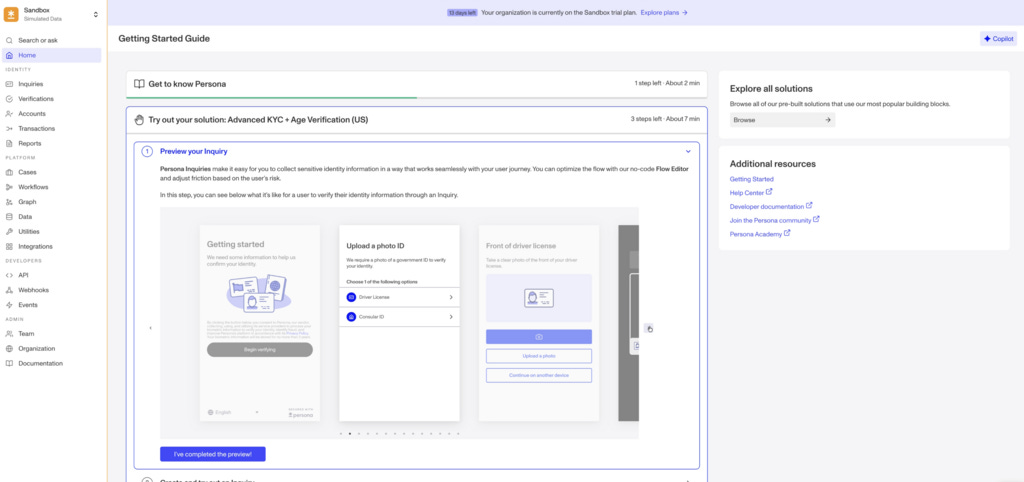
Persona is the platform you reach for when you don’t want a verification tool so much as a verification toolkit. It hands you the building blocks and lets you assemble the flow.
That’s its whole personality, and it’s a real strength. The no-code workflow builder lets you orchestrate document checks, selfie and liveness, database lookups, and watchlist screening into branching logic that fits your exact risk policy. Low-risk users glide through a light check; anything suspicious gets routed into deeper steps or manual review. Coverage spans 200+ countries, and it folds in KYC, KYB, AML, and age assurance under one roof. The client list says plenty about who it’s built for, with names like LinkedIn, Etsy, and Lyft running on it.
I really liked their user experience during the identity verification process. The design is beautiful, the process is smooth and fast, and the end user is guided with clear instructions.
We tried to spoof their liveness system, but without success. We also were not able to pass their checks using a fake California driver’s license.
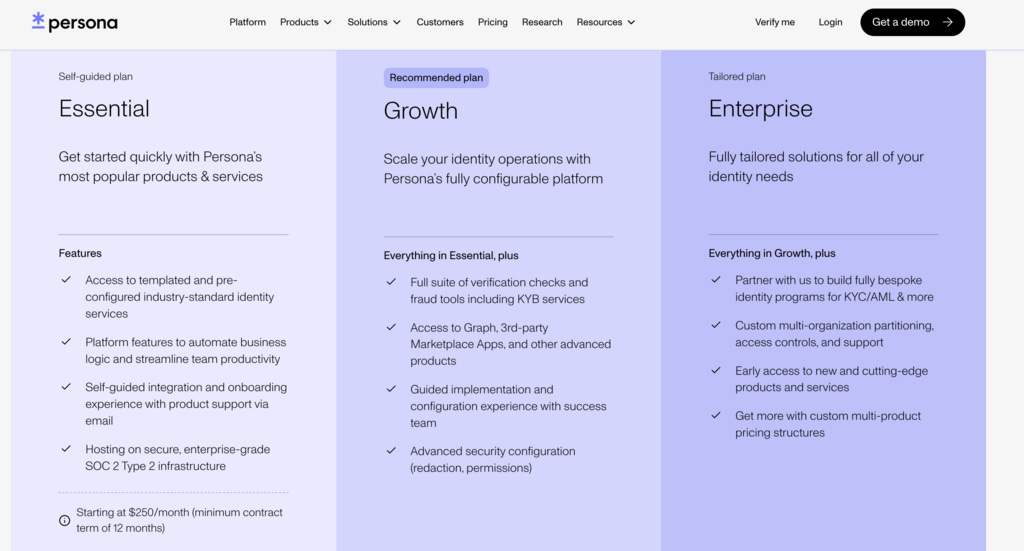
My honest take, having looked closely: Persona is excellent if you have the appetite and the people to design your own flows, and somewhat wasted if you don’t. All that configurability is power, but power you have to wield. A team that just wants a clean, working check out of the box can find the surface area larger than they need, and the setup more involved than a simpler tool would ask. Pricing reflects the platform nature too. There’s an entry tier that starts around 250 USD per month and a free trial to kick the tires, but costs climb as your volume grows and as you bolt on the more advanced compliance and fraud modules. Worth it for builders. Possibly overkill for everyone else.
4. xProof
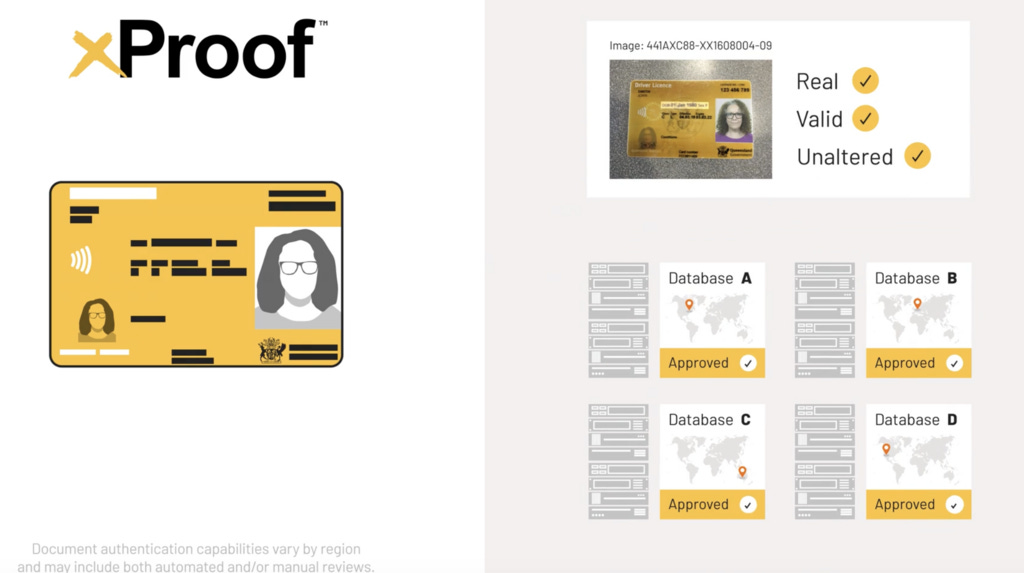
xProof doesn’t get the airtime the bigger brands do, and that’s a shame, because where it’s strong it’s genuinely strong: the document itself.
This is a platform built around forensic document depth. Patented document verification, advanced OCR, face biometrics, and the kind of presentation and injection attack detection that matters when fraudsters stop holding up fake IDs to a camera and start feeding synthetic images straight into the data stream. It reads documents from almost every sovereign entity, adds photo watchlist matching for KYC and AML, and works across mobile, web, kiosk, and on-site setups.
The piece that earns it a spot, in my view, is deployment flexibility. You can run it as multi-tenant SaaS, single-tenant cloud, or fully on-premises, which is a real differentiator for banks, government bodies, or any organization with strict data-residency rules that can’t ship personal data off to someone else’s cloud. It also plugs into existing IAM and CRM systems, and pairs with its sibling xAuth and xFace tools to carry authentication through the whole customer lifecycle, not just the first check.
What holds me back from ranking it higher is reach, not capability. xProof has a smaller footprint and less name recognition than the platforms above it, which means a thinner partner ecosystem and pricing that’s more “talk to us” than published. If forensic document accuracy and on-prem control are your priorities, it deserves a slot on your shortlist. If you want a large community, lots of prebuilt integrations, and transparent self-serve pricing, you may feel the gap.
5. 1Kosmos
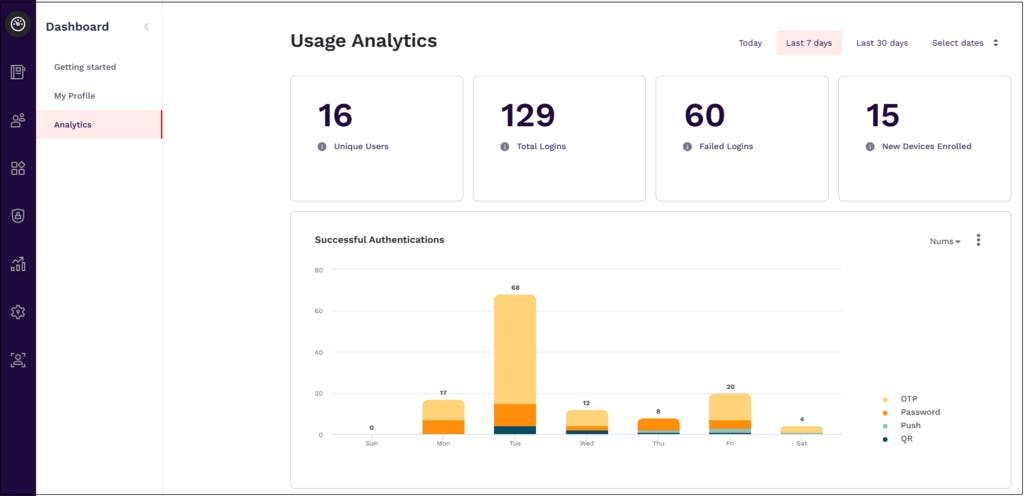
Most tools verify someone once and move on. 1Kosmos is built on the idea that identity should keep working long after onboarding, every time that person logs back in.
That’s the lens to view it through. The 1Kosmos platform combines high-assurance identity verification with passwordless, biometric multi-factor authentication, so the identity you establish on day one becomes the credential that secures every future access event. Verification itself is rigorous: AI and machine learning paired with issuing-authority checks through AAMVA, ICAO, and others, document fraud detection the company puts above 99 percent accuracy, and identity triangulation to weed out stolen and synthetic identities at account creation.
The architectural choice is what makes it distinctive. 1Kosmos uses a privacy-by-design model built on a private, permissioned blockchain, which means user personal data isn’t pooled into one central honeypot waiting to be breached. For organizations that take data-protection exposure seriously, and that have to answer to GDPR, that’s a meaningful design decision rather than a marketing line. It’s well credentialed too, certified to NIST 800-63-3, FIDO2, and iBeta among others, and it reviews strongly with workforce and enterprise users.
The trade-off is scope. This is an enterprise-grade identity and access platform, and that weight shows. If all you need is a quick onboarding check for a consumer signup, 1Kosmos is more machine than the job calls for, and the value really lands when verification and ongoing passwordless access are part of the same problem you’re solving. For workforce identity, regulated industries, and anyone who wants to kill passwords while they’re at it, it’s a compelling package.
How to choose
Look at your pricing model, not just your price. Paying for denied and abandoned attempts adds up fast. Models like pay-per-approved tie cost to value, which matters most if your traffic is spiky or fraud-heavy.
Match the fraud tooling to your actual threat. If your problem is account fraud and abuse, signal enrichment like SEON’s earns its cost. If it’s forged documents, lean toward forensic depth.
Check what’s included before the enterprise contract. Some vendors lock the features you need behind five-figure annual deals. Confirm what your starting tier really gives you.
Weigh build-it-yourself against works-out-of-the-box. Customizable platforms reward teams with the resources to configure them and frustrate teams that don’t.
Confirm coverage and compliance for your reality. The countries you operate in, the IDs your users carry, and certifications like SOC 2, ISO 27001, GDPR, and NIST.
Use the trial. Run real traffic through it. Watch completion rates and how many genuine users drop off at the check.
Frequently asked questions
What is the best identity verification software in 2026?
For most teams we’d start with iDenfy, largely because of its pay-per-approved pricing and the fact that it puts enterprise features within reach on basic plans. SEON, Persona, xProof, and 1Kosmos are strong picks if your priority is fraud enrichment, custom workflows, document forensics, or passwordless access respectively.
Why does the pricing model matter so much?
Because attempts that fail still cost you under most models. If you’re billed for every check, fraudulent and abandoned ones included, your spend balloons with bad traffic. Pay-per-approved flips that, so you pay when a verification actually succeeds.
What makes SEON different from a standard ID check?
SEON adds fraud intelligence on top of verification. Its phone and email enrichment scores risk from a user’s digital footprint, like whether a number is tied to WhatsApp, Viber, or registered social accounts, which helps you spot a throwaway identity even when the documents look fine.
Is a customizable platform like Persona worth it?
If you have the team to design and maintain your own verification flows, yes, the flexibility is a genuine advantage. If you just want a clean check that works on day one, a more opinionated tool will get you there with less effort.
Do these tools offer trials?
iDenfy offers a 14-day trial so you can test on real traffic before committing. SEON, Persona, 1Kosmos and xProof sits behind an annual subscription with no pay-as-you-go, so factor that into how you evaluate it. You have to book a call with their sales team to get an sandbox account.